Guillermo del Toro has a specific "touch." It’s tactile. It’s heavy. When you watch the original 2013 Pacific Rim, you feel the weight of every gear turn. The robots, these massive Jaegers, don’t just move; they struggle against physics. Then came 2018. We got Pacific Rim Uprising, and suddenly, the laws of gravity seemed to take a vacation. Fans noticed. Critics noticed. The box office definitely noticed.
Comparing Pacific Rim Uprising to the first Pacific Rim is an exercise in understanding how a franchise can lose its DNA while trying to "evolve." Honestly, it’s a bit of a tragedy. You’ve got this incredible world-building from the first film—the Drift, the Kaiju War, the sacrifice of Stacker Pentecost—and then the sequel leans into a younger, faster, more "Power Rangers" aesthetic. It’s weird.
The Weight of the World: Why Movement Matters
In the first film, Gipsy Danger felt like a walking skyscraper. Del Toro and his team at Industrial Light & Magic (ILM) focused on "scale cues." This meant slow movement, massive splashes of water that took forever to fall, and a sense of inertia. You could practically smell the diesel and salt.
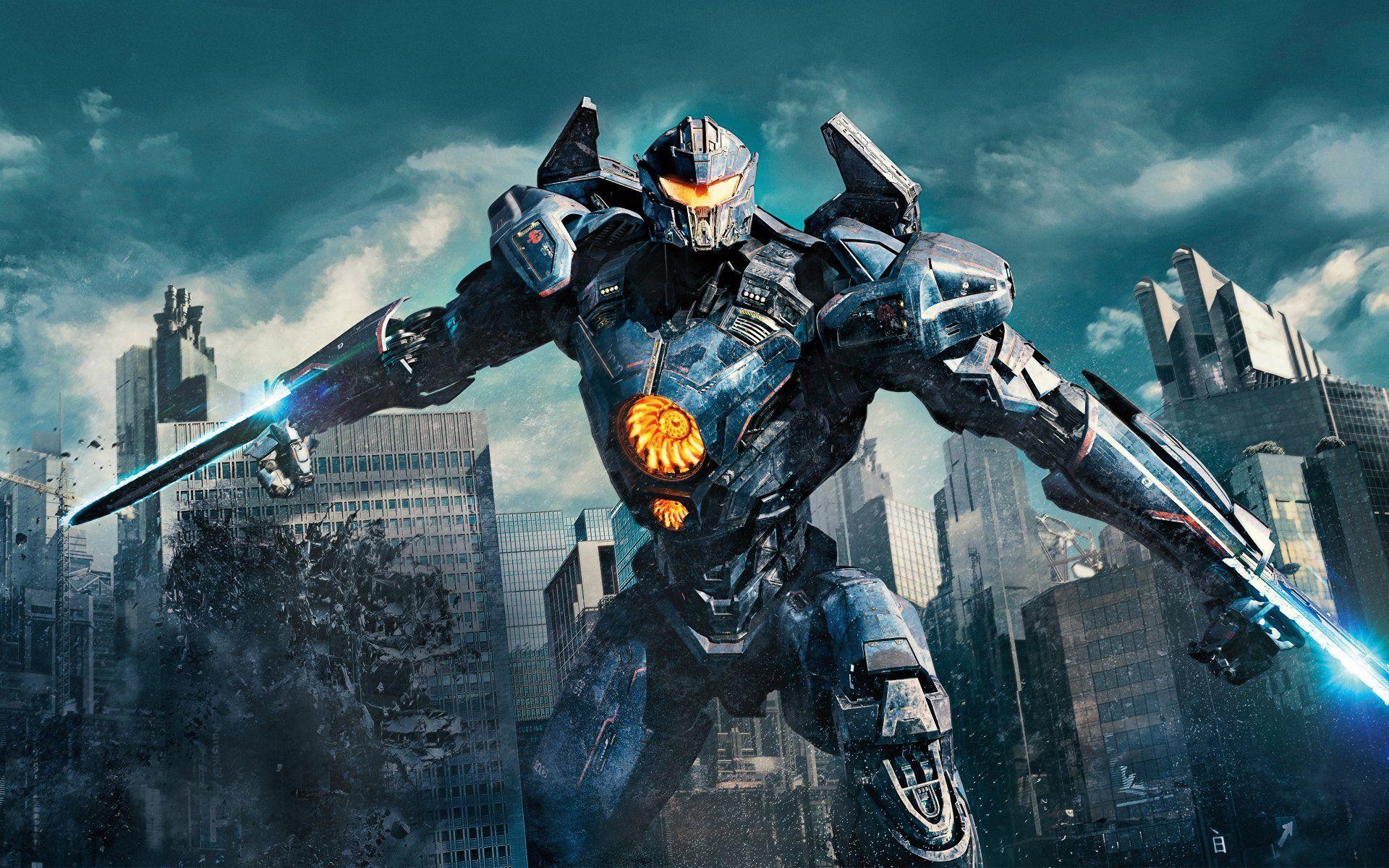
Enter Steven S. DeKnight for the sequel. The Jaegers in Pacific Rim Uprising are nimble. They run. They jump. They do backflips. On one hand, you could argue that ten years of technological advancement within the movie's universe would lead to faster mechs. Sure. Makes sense on paper. But for the audience? It killed the "wow" factor. When a robot moves like a human in a suit, it stops feeling like a giant robot.
There’s this specific scene in the first movie where Gipsy Danger drags a cargo ship through the streets of Hong Kong to use as a bat. It’s iconic because it feels hard to do. In the sequel, the fight in Siberia or the final brawl in Tokyo feels weightless. The stakes feel lower because the physical consequences of a punch don't seem to ripple through the environment the same way.
Characters, Drifting, and the Human Element
Let’s talk about John Boyega. He’s great. Jake Pentecost is a fun character—a scavenger living in the shadow of his war-hero father. But he’s dropped into a story that feels a bit more like a YA novel than the gritty military sci-fi of the original.
The first Pacific Rim was built on the concept of "The Drift." It wasn't just a pilot gimmick; it was a metaphor for trauma and connection. Raleigh Becket and Mako Mori had to share their deepest memories to save the world. It was intimate.
In Pacific Rim Uprising, the Drift feels like a Wi-Fi connection. It’s just there. The emotional core is replaced by a team of cadets. While Cailee Spaeny does a solid job as Amara Namani, the "teenager building a Jaeger in a garage" trope felt a little out of place for a world that was nearly ended by interdimensional monsters a decade prior. It shifted the tone from "last stand of humanity" to "high-stakes summer camp."
The Evolution of the Kaiju
The Kaiju in the first film were Lovecraftian nightmares. They had names like Knifehead and Otachi. They were bioluminescent, terrifying, and felt truly alien. They were an existential threat.
In Pacific Rim Uprising, the twist involving the Kaiju-Jaeger hybrids was actually pretty cool. Seeing the "Precursors" use Charlie Day’s character, Dr. Newton Geiszler, as a puppet was a genuinely creepy narrative choice. Newt’s descent into madness is probably the most interesting bridge between the two films. However, the Mega-Kaiju at the end—the fusion of three different monsters—felt a bit like a CGI blob. Bigger isn't always better.
The original film used rain, darkness, and neon to hide the limitations of CGI and create atmosphere. The sequel puts everything in bright daylight. While it’s nice to actually see the action, the bright lighting exposes the "digitalness" of the monsters. They lost their texture. They stopped feeling like flesh and bone and started feeling like pixels.
Why the Sequel Underperformed
The numbers tell a story. The first film was a massive hit in China, which basically saved it and allowed the sequel to happen. But Pacific Rim Uprising didn't capture that same lightning in a bottle.
- Production Delays: The gap between 2013 and 2018 was too long. The hype had cooled.
- Creative Changes: Losing Guillermo del Toro as director was the death knell for the "vibe." He stayed on as a producer, but his visual fingerprints were gone.
- Cast Departures: Charlie Hunnam couldn't return due to scheduling conflicts with King Arthur: Legend of the Sword. His character, Raleigh, was just... gone. Mentioned in a line of dialogue, but essentially erased. Fans felt that.
The movie ended on a cliffhanger, with Jake Pentecost promising to take the fight to the Precursors' home world. But since the movie barely doubled its budget at the global box office ($290 million on a $150 million budget, plus marketing), that third movie has been stuck in development hell ever since.
The Legacy of the Franchise
Is Pacific Rim Uprising a "bad" movie? Not necessarily. If you watch it as a standalone giant robot flick, it’s perfectly fine popcorn entertainment. It’s colorful, fast-paced, and has some neat designs like Guardian Bravo and Saber Athena.
But as a sequel to Pacific Rim, it fails to understand what made the original a cult classic. The first film was a love letter to Kaiju cinema and Mecha anime (think Evangelion or Gundam). It had soul. The sequel felt like a "product."
We’ve since seen the franchise move to Netflix with the anime series Pacific Rim: The Black. Interestingly, the anime actually does a better job of blending the tone of the two movies. It returns to the horror and desperation of the first film while using some of the lore introduced in the second.
How to Appreciate Both Today
If you’re revisiting these movies, it’s best to view them through different lenses.
Watch the original Pacific Rim on the biggest screen possible with the sound turned up. Focus on the sound design—the "clank" of the metal, the roar of the engines. It’s a masterclass in world-building.
Watch Pacific Rim Uprising for the "what if" scenarios and the expansion of the lore regarding the Precursors. Don’t expect the same emotional weight. Treat it like a high-budget Saturday morning cartoon.
Actionable Insights for Fans and Collectors:
- Check out the "Art of" Books: Both films have incredible concept art books. The first one, Pacific Rim: Man, Machines, and Monsters, is a must-have for seeing Del Toro's process. The second one shows how much work went into the "sleek" Jaeger designs, even if they didn't land with everyone.
- Watch the Anime: If you felt let down by the sequel, Pacific Rim: The Black on Netflix is the actual spiritual successor you’re looking for. It treats the Kaiju as a genuine threat again.
- Physical Media Matters: These are "reference" discs. If you have a 4K HDR setup, the Hong Kong battle in the first movie is still one of the best ways to show off what your TV can do. The sequel's daylight battles are great for testing color accuracy and peak brightness.
- Follow the Lore: Read the graphic novels like Pacific Rim: Tales From Year Zero. They provide the backstory for the Jaegers that the movies only hint at, filling in the gaps of the 10-year jump between the films.
The contrast between these two films serves as a permanent lesson in Hollywood filmmaking: tech and speed can't replace atmosphere and weight.