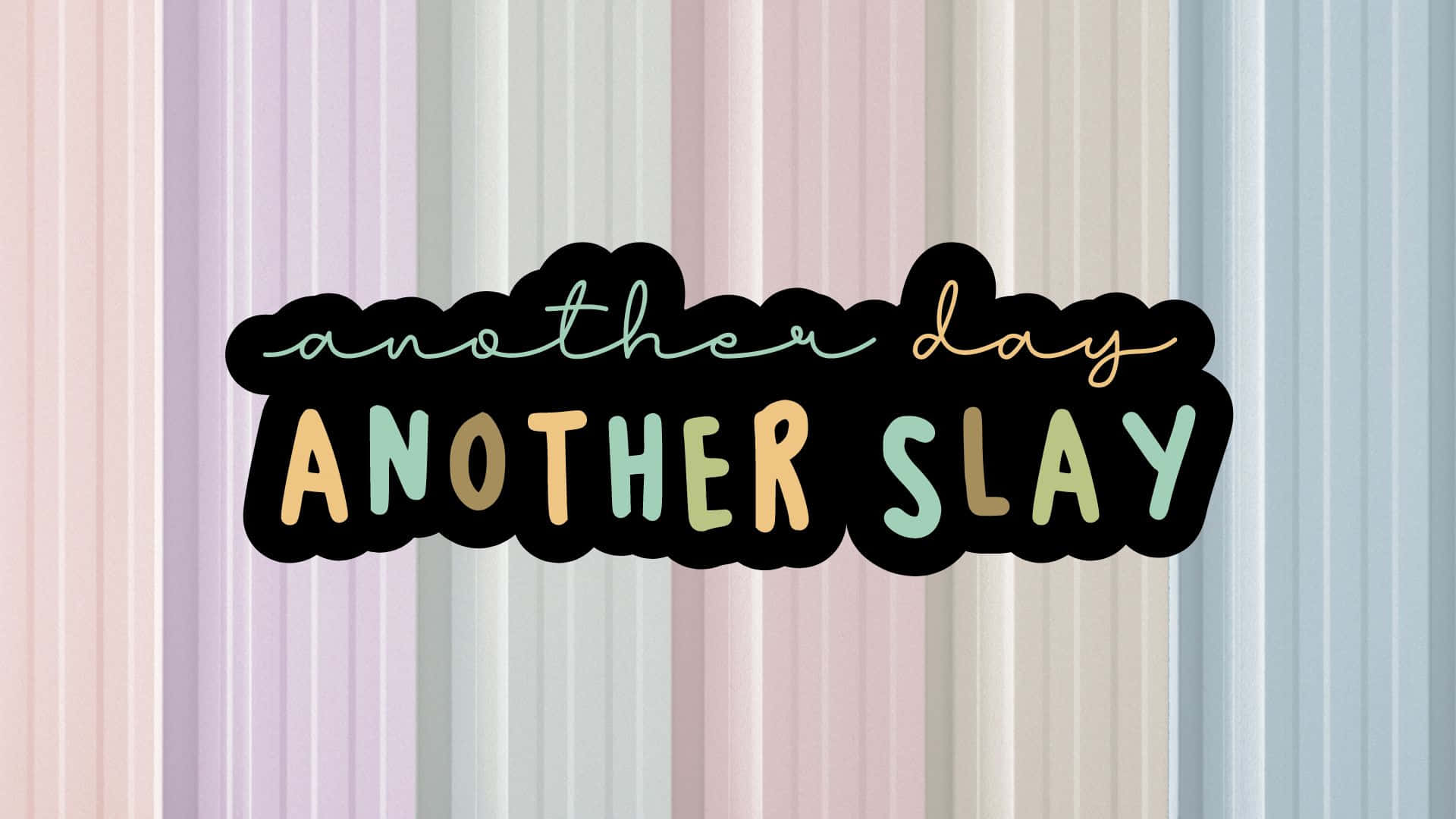
You’ve seen it. You’ve probably said it. It’s that rhythmic, almost melodic phrase that has somehow embedded itself into the very fabric of how we talk online. Another day another slay period isn't just a string of words. It’s a vibe. It’s a mantra. Honestly, it’s a lifestyle for anyone trying to survive the daily grind with even a shred of confidence left.
Language moves fast. One minute we’re all saying "on fleek," and the next, that’s considered ancient history, relegated to the archives of 2014. But this phrase feels different. It’s stickier. It combines the mundane reality of the "another day" cycle with the aggressive positivity of "slay." Adding "period" at the end? That’s the punctuation of absolute certainty. It’s not a question. It’s a fact.
The Linguistic Roots of Slay Culture
We can't talk about another day another slay period without acknowledging where "slay" actually comes from. It didn’t start on TikTok. Not even close. If you look at the work of linguists like Dr. Geneva Smitherman or follow the history of Black Queer culture, you’ll find the roots of this terminology in the ballroom scene of the 1970s and 80s.
To "slay" was to win. It was to look so good, to perform so well, that you metaphorically "killed" the competition.
Fast forward to the 2020s. The phrase has been "Gen Z-ified." It’s been shortened, lengthened, and meme-d into oblivion. But the core remains the same: excellence in the face of the everyday. When someone says another day another slay period, they are tapping into a long lineage of using language as a tool for empowerment, even if they're just using it to describe getting an iced coffee before a 9-to-5.
Why the "Period" Matters So Much
Language is about rhythm. If you just say "Another day, another slay," it’s a rhyme. It’s cute. But it lacks weight. Adding the word period (often spelled "periat" or "purr" in certain online subcultures) acts as a linguistic full stop.
It’s an intensifier.
Think about the way people communicate on platforms like X or Instagram. Nuance is often lost, so we use "period" to signal that there is no room for debate. It transforms a simple observation into a decree. You aren't just surviving the day; you are dominating it. Period.
The Psychology of the Daily Slay
Why does this specific phrase resonate with millions? Psychologically, it’s a form of "manifestation-lite." We live in an era characterized by burnout, economic shifts, and a constant stream of stressful news. In that context, the "another day" part of the phrase acknowledges the repetitive, sometimes exhausting nature of modern life.
It’s the "another slay" part that does the heavy lifting.
By framing the mundane as a series of "slays," people are essentially gamifying their existence. Did you answer all your emails? Slay. Did you make it to the gym? Slay. Did you simply manage to put on a matching outfit when you felt like staying in bed? Another day another slay period.
It’s a low-stakes way to claim victory. Experts in behavioral psychology often point to the importance of "small wins." This phrase is the verbal embodiment of a small win. It’s self-affirmation disguised as internet slang.
Memes, TikTok, and the Viral Spread
The explosion of another day another slay period can be traced back to various viral audio clips. TikTok is the primary culprit here. Creators use the phrase to soundtrack everything from "Get Ready With Me" (GRWM) videos to satirical takes on corporate culture.
There’s a specific irony often attached to it now.
You’ll see a video of someone looking absolutely exhausted, hair in a messy bun, staring at a mountain of laundry, with the caption: another day another slay period. This ironic usage is what keeps the phrase alive. If it were only used by people who were actually "slaying" in the traditional sense, it would become annoying. The fact that it’s used by the girl who just spilled coffee on her white shirt makes it relatable. It’s a joke we’re all in on.
Is "Slay" Becoming Meaningless?
Some critics argue that the over-saturation of another day another slay period is diluting the power of the word. When everything is a slay, nothing is. This is a common phenomenon in linguistics called "semantic bleaching."
Words lose their intense meaning over time as they become more common. "Awesome" used to mean something that inspired literal awe and terror. Now, it means your pizza arrived on time.
However, in the case of another day another slay period, the "bleaching" might actually be the point. By applying a high-energy, high-success word to the boring parts of life, we are intentionally lowering the barrier for what counts as a success. It’s a collective agreement to be nicer to ourselves.
The Commercialization of Slang
Naturally, brands have tried to jump on the bandwagon. You can find "Another Day Another Slay" journals, t-shirts, and coffee mugs at big-box retailers. This is usually the death knell for a slang term. Once a corporation puts it on a throw pillow, the "cool" factor usually evaporates.
But "period" is a tough one to kill. It’s too functional.
Because the phrase is so modular, it keeps evolving. People start saying "another day another serve" or "another day another slaylet." The flexibility of the structure allows it to outrun the cringe-factor of corporate adoption for a little bit longer than your average meme.
How to Use It Without Being Cringe
If you’re worried about sounding like "the fellow kids" meme, there’s an art to using another day another slay period.
- Context is everything. It works best in informal settings or as a self-deprecating joke. Using it in a serious business presentation might get you some weird looks, unless your office culture is incredibly laid back.
- Lean into the irony. The most successful uses of the phrase online are the ones that acknowledge the absurdity of "slaying" while doing something totally normal.
- Respect the origins. Knowing that this language comes from Black and Queer spaces is important. It prevents the usage from feeling like mindless appropriation and gives you a better handle on the tone and timing.
The Future of the Phrase
Will we still be saying another day another slay period in 2027? Maybe not. Internet trends have a half-life that seems to get shorter every year. But the sentiment behind it—the idea that we deserve a "period" at the end of our daily efforts—isn't going anywhere.
We are currently in a cycle of "reclamation" where we take words that feel bold and use them to bolster our own spirits. Whether the word is slay, serve, or something we haven't even invented yet, the structure of the "another day" mantra will likely persist.
It’s a linguistic shield. It’s a way to look at a Tuesday afternoon and decide that, despite everything, you’re doing just fine.
Actionable Ways to Slay the Day
If you want to actually live the "another day another slay period" life, it’s less about the words and more about the mindset. Start by identifying three "micro-wins" you achieve every morning. It could be as simple as drinking a glass of water before your caffeine or actually making your bed.
Give yourself the "period" at the end of those tasks. Don't look at what's left to do; look at what you've already "slayed."
Keep your digital hygiene in check, too. If your feed isn't making you feel like you're slaying, it's time to hit that unfollow button. Surround yourself with the kind of energy that makes the phrase feel like an honest reflection of your day rather than a sarcastic mask. Life is heavy enough; there's no harm in adding a little rhythmic flair to the way you talk about your progress. Just remember to keep it authentic, keep it moving, and always, always add the period.