You’re scrolling through a shortwave radio dial, past the crackling white noise and the faint echoes of foreign news broadcasts, when you hit it. A rhythmic, mechanical drone. Bzzzt. Bzzzt. Bzzzt. It’s relentless. It sounds like a ghost in the machine, or maybe a heart monitor for a dying civilization. This is the sound of radio station uvb 76 live, a broadcast that has haunted the airwaves since the height of the Cold War. Most people call it "The Buzzer." It doesn’t play music. It doesn’t sell advertising. It just sits there on 4625 kHz, pulse after pulse, year after year, occasionally interrupted by a cold, muffled Russian voice reading out strings of numbers and names.
Why?
Honestly, the mystery is half the appeal. In a world where everything is tracked by GPS and encrypted by 256-bit algorithms, there’s something deeply unsettling about a massive analog signal that just... exists. It’s brute-force technology. It’s a relic that refuses to die.
The Cold Reality of 4625 kHz
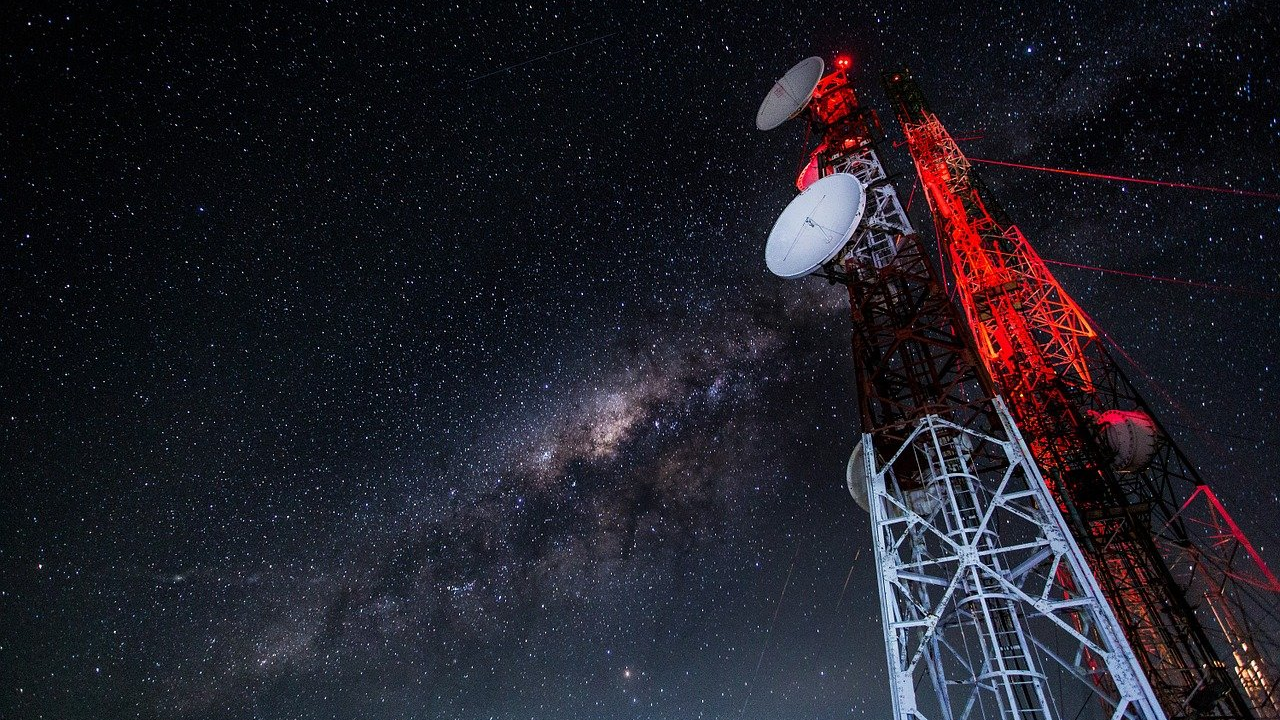
Let’s get the technical stuff out of the way first. Radio station uvb 76 live transmits on a frequency of 4625 kHz using a type of modulation called single-sideband (SSB). Specifically, it uses upper sideband (USB), though you can hear it on almost any decent shortwave receiver if the atmospheric conditions are right. For decades, the signal originated from a military hub near Povarovo, not far from Moscow. If you look at old photos of the site, it’s exactly what you’d expect: crumbling concrete, rusted towers, and "No Trespassing" signs that actually mean it.
Around 2010, the signal moved.
Triangulation by amateur radio enthusiasts—people who spend their weekends staring at waterfalls on SDR (Software Defined Radio) screens—suggested the transmitter moved toward the Western Military District. It’s not just one site anymore. It’s a network. This makes it harder to kill and much harder to ignore.
The sound itself is fascinatingly lo-fi. It isn't a digital file on a loop. You can actually hear background noise sometimes. People have reported hearing conversations in Russian, the clattering of furniture, and even the "Swan Lake" melody playing in the background. It’s basically a live microphone left open in a room, pointed at a device that generates the buzz. Think about that. Somewhere in Russia, there is a room where this sound is being physically produced, and it’s been that way for over forty years.
Monoliths and Morse: What the Messages Mean
Every once in a while, the buzzing stops. The silence is terrifying.
Then, a voice comes on. It’s usually a flat, monotone delivery. They call out "Monoliths." These are "format" messages. A typical transmission might sound like: "MDZhB 76 497 GULYaTsIYa 25 09 07 39." These are phonetic codes. To a casual listener, it’s gibberish. To a military unit in the field, it’s a specific instruction.
Radio historians and signals intelligence (SIGINT) nerds generally agree that the station serves as a "Channel Marker." It’s a way of saying, "This frequency is occupied, it belongs to the Russian military, and we are ready to transmit if the world ends." It keeps the frequency clear of other traffic. If the buzzing stops and stays stopped, that’s when you should probably start worrying.
The Dead Hand Theory
You’ve probably heard of "Perimeter," the Soviet-era "Dead Hand" system designed to automatically launch nuclear missiles if the leadership is wiped out in a first strike. A lot of people think radio station uvb 76 live is a trigger for that system.
It's a scary thought.
However, most experts, like those at the Numbers Station Research Group, think it's more mundane but equally serious. It’s likely a communication system for the military commissariats. It’s a way to broadcast orders to the entire Western Military District simultaneously without relying on satellites or fiber optic cables that can be cut in a war. Shortwave bounces off the ionosphere. You can't "cut" the sky.
The Weirdness of Modern Monitoring
What's wild is how the internet has turned this spooky relic into a weird form of entertainment. You can go to sites like the University of Twente’s Wide-band WebSDR and listen to it right now. There are YouTube livestreams with thousands of people watching a static-filled line, waiting for something to happen.
In 2020 and 2021, the station got weirdly active. Pirates—hackers with high-powered transmitters—started "overpowering" the signal. They would broadcast memes, "Gangnam Style," or even draw pictures in the waterfall display (the visual representation of the radio frequency). You’d see a troll face or the "Among Us" character appearing in the radio waves.
It was surreal.
A high-stakes military frequency being trolled by people with too much time and a DIY antenna. But the Russian military just boosted their power and kept buzzing. They don't care about your memes. They have a job to do.
Why We Can't Stop Listening
We are obsessed with things we can't explain. Radio station uvb 76 live represents the "old world" of espionage. It’s the stuff of John le Carré novels and creepy pastas. It feels tactile.
If you want to experience it yourself, don't just watch a YouTube video. Get a cheap RTL-SDR dongle. Plug it into your computer. String a long piece of wire out your window. When you find 4625 kHz on your own equipment, and that buzz starts hitting your speakers, it feels different. It feels like you’re eavesdropping on a secret that wasn't meant for you.
There is no "off" switch for this thing. It has survived the collapse of the Soviet Union, the rise of the internet, and the transition into a new era of global tension. It is a constant.
How to Track the Buzzer Yourself
If you’re serious about diving into the world of radio station uvb 76 live, you need to look beyond the creepy creepypasta stories. The real science of signal propagation is way more interesting.
- Check the Solar Cycle: Shortwave signals travel better at night and during specific parts of the 11-year solar cycle. If the buzz is faint, wait for the sun to go down in Eastern Europe.
- Use SDR Platforms: You don't need a $1,000 radio. Use the WebSDR at the University of Twente. It’s the gold standard for European signals.
- Log the Transmissions: Most "voice" events happen around the top of the hour or during significant geopolitical events. Keep a notebook. You’ll start to see patterns in the phonetic names (Anna, Nikolai, Ivan).
- Verify the Frequency: While 4625 kHz is the home base, listen for "The Pip" on 3756 kHz or "The Squeaky Wheel" on 3828 kHz. They are part of the same family.
The Buzzer isn't going anywhere. It is a reminder that beneath our digital, clean, encrypted world, there is a foundation of raw, buzzing energy that the military uses to keep its grip on the world. It’s loud. It’s annoying. It’s terrifying. And it’s live right now.
Actionable Insights for Shortwave Enthusiasts
If you want to genuinely engage with the UVB-76 phenomenon, start by identifying the "marker" signal's pulse rate—it’s roughly 25 pulses per minute. Use a waterfall display software like SDR# (SDR Sharp) to look for sideband splatter, which can indicate if the transmitter is being interfered with or if the hardware is failing. Finally, join a community like the Priyom.org group; they have been logging these transmissions for decades and provide the most accurate "de-coding" of the Russian phonetic alphabet used during voice events. Don't just listen for the mystery—listen for the mechanics.