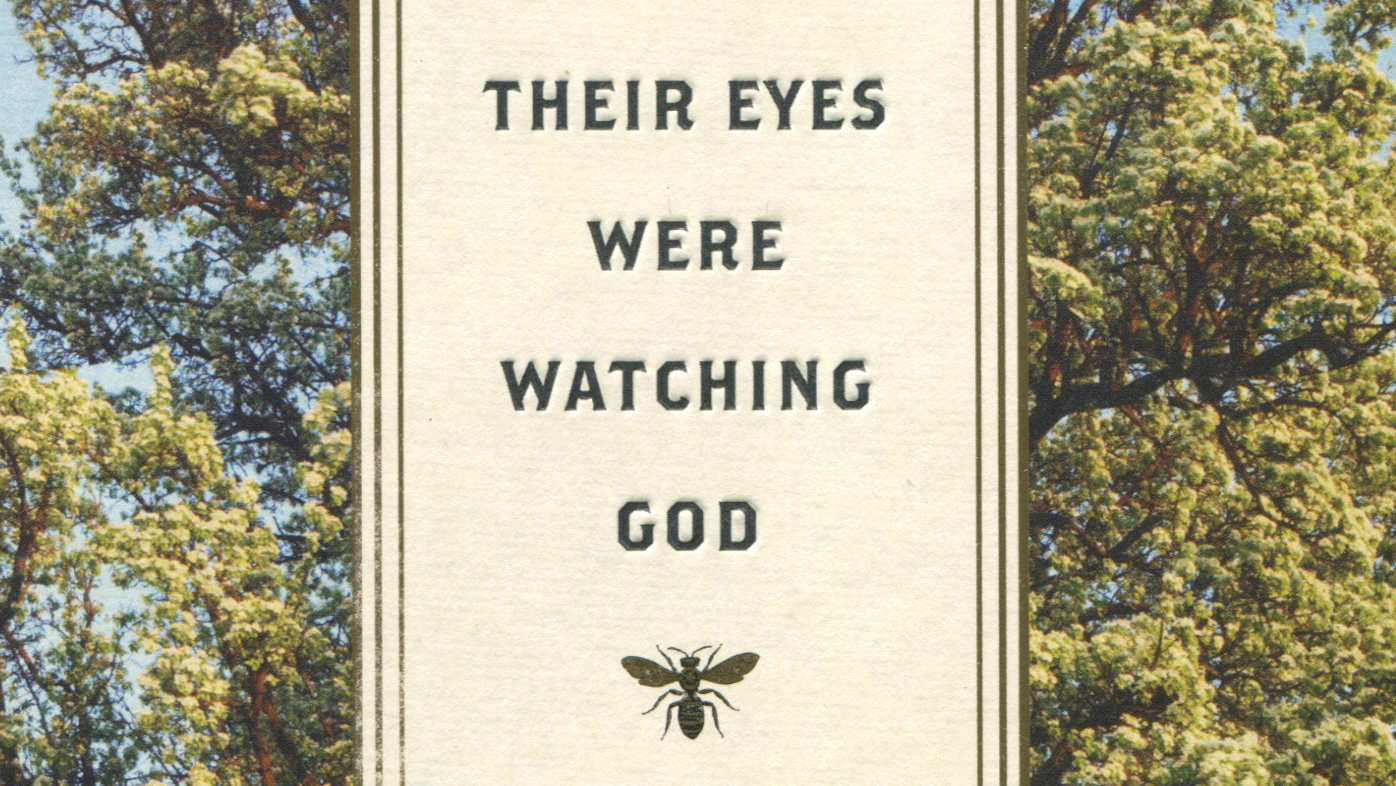
Zora Neale Hurston’s masterpiece isn’t actually titled God's Eyes Were Watching. People trip over the name constantly. They search for "God's eyes were watching" because the image of those desperate characters staring into a soul-crushing hurricane is so visceral it burns into the brain. But the real title—Their Eyes Were Watching God—is way more specific about the power dynamic between a black woman in the 1930s and the universe itself. It’s a book that almost didn't survive history. In fact, when it was published in 1937, some of the most famous Black male writers of the time absolutely hated it. They thought it was "frivolous." Imagine calling one of the greatest explorations of female autonomy in the English language frivolous.
It’s wild how things change.
If you're looking into why people are still obsessed with this story, it’s usually not because of a school assignment. It’s because Janie Crawford’s life—her three marriages, her obsession with "the horizon," and her refusal to be a "mule of the world"—feels weirdly modern. We are still out here trying to figure out how to be ourselves while everyone else is trying to tell us who we should be.
The Real Story Behind God's Eyes Were Watching (And Why the Title Matters)
The scene that everyone remembers involves a hurricane. Janie, Tea Cake, and Motor Boat are huddled together as Lake Okeechobee turns into a killing machine. Hurston writes that they "seemed to be staring at the dark, but their eyes were watching God."
What does that actually mean?
Honestly, it’s about the moment humans realize they aren't in control. Up until that point, Janie’s life was controlled by her Nanny, then by her first husband Logan Killicks, and then by the "Mayor" Joe Starks. She was a passenger in her own skin. But when the storm hits, the social structures of Eatonville don't matter. The money Joe left her doesn't matter. It’s just her and the Big Question.
Some critics, like Richard Wright (who wrote Native Son), famously slammed Hurston. He argued she wasn't being "political" enough. He wanted her to write about the "race problem" in a way that felt like a protest. But Zora Neale Hurston was an anthropologist. She didn't want to write about Black people as victims; she wanted to write about them as people with rich, complex, messy interior lives. She was looking at the culture of the Florida Everglades through a lens of love and language, not just struggle.
The Eatonville Connection
You can’t talk about this book without talking about Eatonville, Florida. It’s a real place. It was one of the first self-governing all-Black municipalities in the United States. This is crucial. Because Janie lives in an all-Black town, the conflict isn't primarily about Jim Crow laws or white supremacy in the way we see in other 1930s literature. Instead, the conflict is internal. It’s about gender. It’s about colorism. It’s about whether a woman has the right to talk back to her husband on the porch of a general store.
Why Janie’s Three Marriages Are Actually Stages of Evolution
Most people look at Janie’s husbands and think, "Man, she has bad taste." But that’s missing the point. Each man represents a different way of being trapped—or freed.
Logan Killicks was the "security" marriage. Her Nanny forced her into it because, having survived slavery, Nanny thought "freedom" just meant having a roof and not being raped. To Nanny, love was a luxury Black women couldn't afford. Janie waited for "the pear tree" to bloom in that marriage, but all she got was a guy who wanted her to help him move a manure pile.
Then comes Joe (Jody) Starks.
He’s the "power" marriage. He builds a town, puts Janie on a pedestal, and then proceeds to lock her in a cage. He makes her tie her hair up in a rag because he’s jealous of other men looking at it. He treats her like an ornament. When people talk about God's Eyes Were Watching, they often focus on Janie finally finding her voice and insulting Joe’s manhood right before he dies. It’s a brutal scene. But it was her first real act of self-defense.
Finally, there’s Tea Cake.
He’s the one people argue about. Was he a "good" guy? He was younger. He gambled. He took her money once. He even hit her once to show his "possession" after a weird jealousy spat. But he also taught her how to play checkers. He treated her like an equal. He took her to the "muck" to pick beans. For the first time, Janie wasn't a "Mrs. Mayor"; she was just Janie.
The Controversy of the Ending
The ending is gut-wrenching. Tea Cake saves Janie from a rabid dog during the hurricane, gets bitten, goes mad with rabies, and Janie has to kill him to save herself.
Think about the weight of that.
She had to kill the only person who ever truly saw her. But Hurston ends the book with Janie back in Eatonville, alone, but totally at peace. She has "the horizon" draped over her shoulder. She doesn't need a man to define her anymore. She has the memory, and she has her own voice.
The Language of the Everglades
If you’ve tried to read the book and struggled, you aren't alone. Hurston wrote the dialogue in a heavy, phonetic Southern Black dialect. It takes a second for your brain to adjust.
- "Ah don’t want yo’ feathers all pulled out."
- "Dat’s 'cause you ain’t got no business to be out heah."
She did this on purpose. As an anthropologist who studied under Franz Boas at Columbia University, Hurston wanted to preserve the "folk" speech of her people. She saw it as poetry, not as "broken" English. When you read it out loud, it has a rhythm. It’s musical. It’s a middle finger to everyone who thought Black Southern culture was something to be ashamed of.
Common Misconceptions About the Book
People get a lot of stuff wrong about this story. Here’s the reality check:
- It’s not a romance. It’s a bildungsroman (a coming-of-age story). The romance with Tea Cake is just a catalyst for Janie’s self-discovery.
- It wasn't a hit. It actually went out of print for decades. We only have it now because Alice Walker (author of The Color Purple) literally went looking for Zora’s unmarked grave in the 1970s and led a revival of her work.
- The hurricane isn't just "the weather." It’s a symbol of the divine or natural world’s total indifference to human ego. It’s the "God" that they were watching.
How to Apply Janie’s "Horizon" to Your Own Life
So, what do we actually do with this? If we’re looking at God's Eyes Were Watching as more than just a book, there are some pretty heavy takeaways for how we live today.
First, stop letting other people's fears define your boundaries. Janie’s Nanny meant well, but her trauma became Janie’s prison. We do this all the time—taking advice from people who are just trying to keep us "safe" instead of letting us be "whole."
Second, recognize when you’re being used as a prop. Joe Starks loved the idea of Janie, but he didn't love Janie. If you're in a job or a relationship where you have to "tie your hair up" (hide your best parts) to make someone else feel powerful, you're in a Joe Starks situation.
Lastly, understand that finding yourself might mean ending up "alone" by society's standards, and that’s perfectly fine. At the end of the book, Janie is a widow living in a house full of memories. The townspeople are gossiping about her. She couldn't care less. She’s been to the horizon and back.
Actionable Steps for Readers:
- Read it out loud. If the dialect is tripping you up, listen to the audiobook narrated by Ruby Dee. It changes the entire experience.
- Audit your "Pear Tree." Think about what your personal version of Janie’s pear tree is—that thing that represents your deepest, most authentic desires. Are you chasing it, or are you settling for a Logan Killicks life?
- Visit the Zora Neale Hurston Museum. If you’re ever in Florida, go to Eatonville. It’s still there. Seeing the physical space where this story "lived" puts the whole "watching God" theme into a terrifyingly real perspective.
The book teaches us that "there are years that ask questions and years that answer." If you’re in a questioning year, Janie Crawford might be the best friend you haven't met yet. Just remember: it's not about the eyes on you; it's about where you're looking.