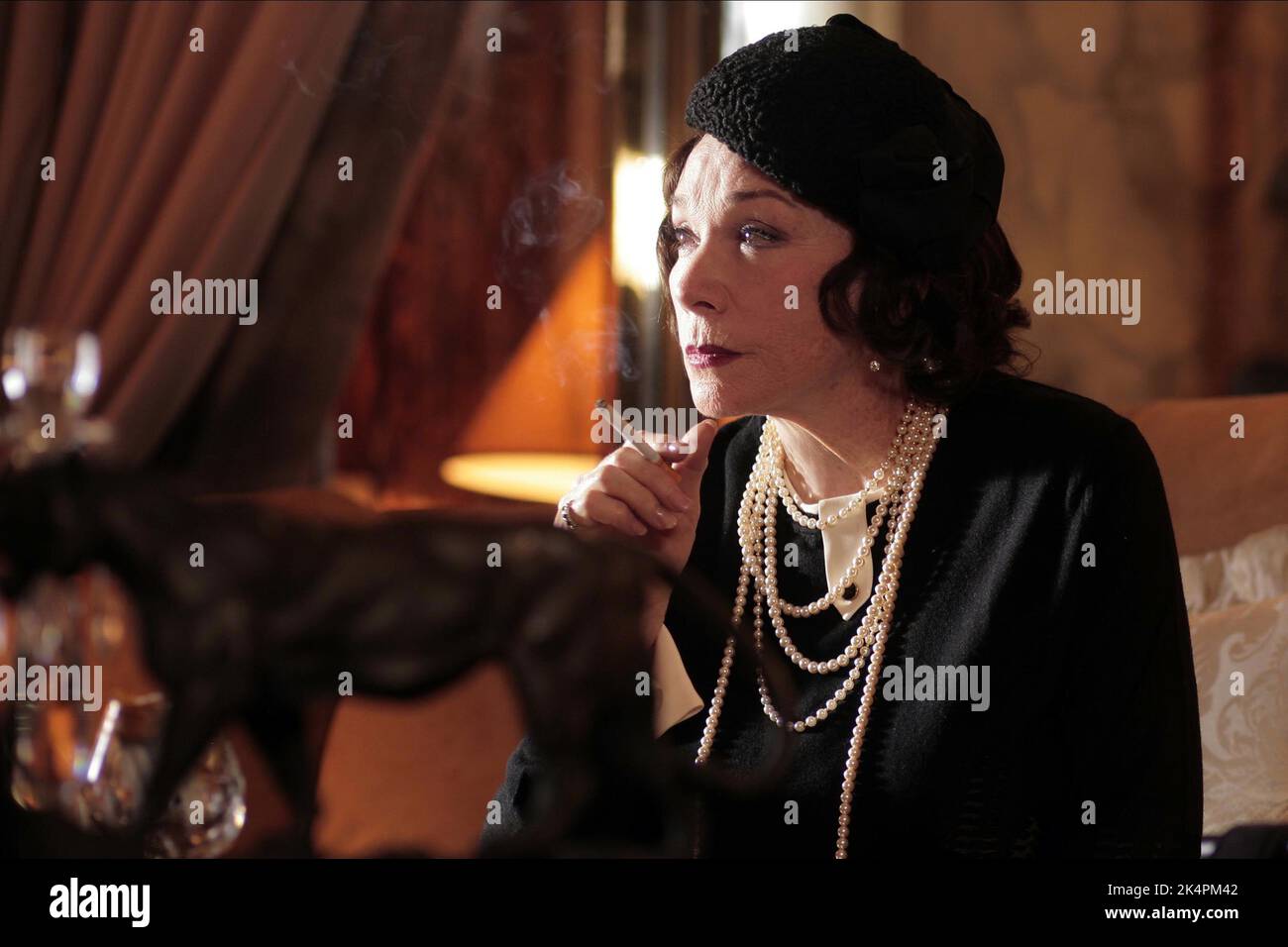
You’ve seen the perfume ads. You know the interlocking C’s. But if you really want to understand the woman behind the tweed suit, you have to look at the 2008 Coco Chanel movie with Shirley MacLaine. Honestly, it’s a bit of a weird one. It isn’t your typical Hollywood gloss-job. Instead, it’s a sprawling, three-hour European co-production that first hit American screens on Lifetime of all places.
Shirley MacLaine plays the older, pricklier version of Gabrielle Chanel. She's in her 70s, making a massive comeback in 1954. It’s sort of a "last stand" vibe. Most people forget how much of a gamble that collection was for her. She had been away from fashion for fifteen years, and the French press absolutely hated her return. They called her clothes "melancholy." They said she was yesterday's news. MacLaine captures that "I don't give a damn" energy perfectly, even if her Virginia accent slips through the cracks now and then.
Why Shirley MacLaine Was an Odd, But Brilliant, Choice
When you think of a French fashion icon, Shirley MacLaine might not be the first name on your list. She didn't even try to do a French accent. Seriously. Director Christian Duguay let her just be... Shirley. And weirdly, it works.
According to MacLaine, the idea actually came from Audrey Hepburn. Back in 1960, Hepburn told her that while she didn't look like Coco, her "spirit" was a match. Decades later, MacLaine finally took the plunge. She played Chanel as a woman who "pronounces" rather than speaks. There’s a specific kind of arrogance there. It’s the arrogance of someone who literally invented the way modern women dress and knows it.
The Duel Portrayal: Barbora Bobulova and the Flashbacks
The movie isn't just Shirley staring out of windows at the Ritz. It uses a framing device where the older Chanel looks back on her life. This is where we meet Slovak actress Barbora Bobulova, who plays the younger Gabrielle.
Bobulova handles the heavy lifting of the romance and the rags-to-riches struggle. You get to see the grit. The orphanage in Aubazine. The singing at the rotisserie (where she got the nickname "Coco" from a song about a lost dog). The way she stole men's clothes—specifically those jodhpurs—because she was tired of riding horses sidesaddle in giant skirts.
The chemistry between Bobulova and Olivier Sitruk (who plays the love of her life, Boy Capel) is the emotional anchor. Without those scenes, Shirley’s version of Chanel would just seem like a mean old lady with a scissors fetish. Instead, you see the heartbreak that built the wall.
What the Movie Gets Right About the Fashion
Fashion movies often get the "making of" part wrong. They make it look like magic. This film actually shows the work.
- The Jersey Revolution: It shows how she took a fabric used for men's underwear and turned it into high fashion because it was cheap and comfortable.
- The Little Black Dress: There’s a scene where Shirley's Chanel explains the origin of the LBD. She wanted to "put the world in mourning" for her lost love, Boy Capel.
- The No. 5 Mystery: It touches on her partnership with the Wertheimers and the creation of the scent that changed the industry.
The costumes were a massive undertaking. They didn't just rent some suits; they had to recreate the evolution of her style over fifty years. The production design captures that shift from the "Belle Époque" ruffles—which Chanel called "meringues"—to the sleek, masculine-feminine lines that we still see on runways today.
The Controversies Left on the Cutting Room Floor
Look, no movie is perfect. If you’re a history buff, you’ll notice a gaping hole in the timeline. The movie mostly skips World War II.
In real life, Coco Chanel’s wartime activities are... complicated. There were documented links to German intelligence (Operation Modellhut). She spent the war living at the Ritz in Paris while the city was occupied. This 2008 movie chooses to focus on the romance and the business, largely sidestepping the "Horizontal Collaboration" accusations that led to her self-imposed exile in Switzerland.
Is it a whitewash? Sorta. But for a TV miniseries intended for a broad audience, it leans into the legend rather than the depositions. If you want the gritty political details, you’re better off reading a biography like Sleeping with the Enemy by Hal Vaughan.
How to Watch the 2008 Miniseries Today
Tracking this down can be a bit of a pain. Since it was a Lifetime movie in the US and a RAI/France 2 production in Europe, it doesn't always sit pretty on the major streaming apps like Netflix or Max.
- Check DVD outlets: It was released as a two-disc set. It’s often found in bargain bins or on eBay for a few bucks.
- Digital Rentals: Occasionally, it pops up on Amazon Prime or Apple TV, but the licensing is finicky because of the multiple international production companies involved.
- YouTube/Archives: Sometimes you can find the full version uploaded by fans, though the quality is usually standard definition.
If you’re a fan of The New Look on Apple TV+ or the 2009 Audrey Tautou film Coco Before Chanel, you owe it to yourself to see the MacLaine version. It’s less of a "mood piece" and more of a grand, old-fashioned biopic.
Actionable Insight for Fashion History Fans:
If you want to truly appreciate the costumes in this movie, watch it alongside a documentary on the 1950s "New Look" by Dior. The 2008 film does an incredible job of showing why Chanel’s return was so radical. She wasn't just making clothes; she was fighting against the restrictive corsetry that had come back into style while she was away. Next time you put on a simple cardigan or a pair of flat shoes, remember that Shirley MacLaine’s gravelly-voiced portrayal represents the woman who fought to make that "normal."
Don't just watch it for the acting; watch it to see how one woman's personal grief and ambition literally changed the silhouette of the 20th century.