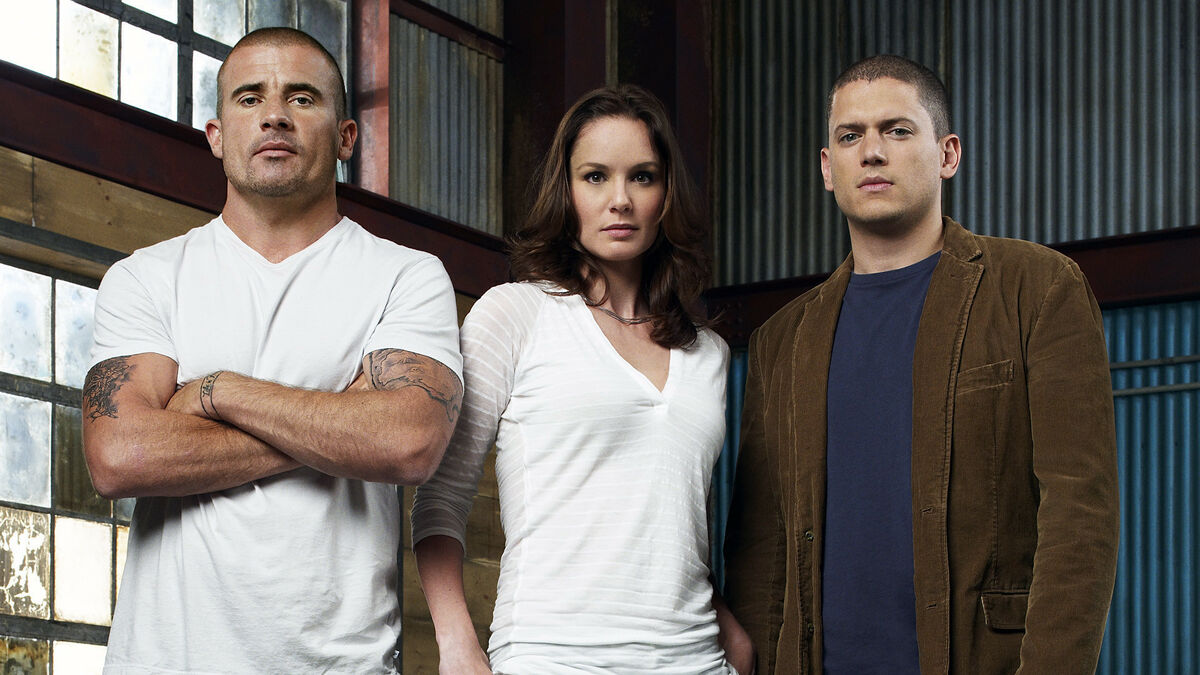
Man, that was a lot. If you were watching television in the late 2000s, you remember the absolute chokehold Michael Scofield had on pop culture. But when we talk about the prison break final episode, things get messy. Really messy. Most people actually mean two different things when they talk about the "end." Are we talking about the Season 4 finale, "Killing Your Number"? Or are we talking about the 2009 standalone movie, The Final Break? Or maybe you're one of the purists who counts the Season 5 revival from 2017 as the actual goodbye?
It’s confusing. Honestly, it’s a bit of a headache to track.
But here’s the thing: the way Michael Scofield’s journey "ended"—at least the first time—was one of the most polarizing moments in TV history. We spent years watching this genius engineer outsmart every prison warden and government agent in the Western hemisphere, only for a nosebleed and a car battery to be his downfall. It felt like a gut punch. You’ve got to wonder if the writers just ran out of ways to keep him in peril, or if they genuinely believed a tragic sacrifice was the only way to pay for all those broken laws.
The Tragedy of "Killing Your Number"
In the Season 4 finale, "Killing Your Number," we finally see the downfall of The Company. It’s the payoff we waited for. Michael, Lincoln, Sucre, and Mahone finally get the Scylla data to Kellogg, the only guy who actually had the power to make their records disappear. It felt earned. After seasons of running, they were finally free. But then, the jump forward happened.
Four years later.
We see Sara and a young boy walking toward a grave. The name on the headstone? Michael J. Scofield.
It was a shocker. At the time, we were led to believe Michael succumbed to his brain tumor, the same one that plagued his mother. It felt poetic, sure, but also incredibly cruel. He fought so hard to give everyone else a life, yet he didn't get to live his own. The prison break final episode didn't just end a show; it broke a fanbase. People were screaming at their CRT TVs. How could a guy survive Sona and Fox River only to die from a medical condition?
The nuance here is in the sacrifice. Michael was always a martyr. From the moment he tattooed that blueprint on his torso, he was trading his life for Lincoln’s. The finale just made that trade permanent. It’s heavy stuff. But wait—there’s more to the story that most people forget happened in a separate special.
The Real Truth Behind The Final Break
Most fans didn't realize that "Killing Your Number" skipped over the most dramatic part of the ending. Fox aired The Final Break shortly after, which acted as a bridge to explain how Michael actually "died." Sara ends up in a female correctional facility for killing Christina Scofield. The irony? Michael has to break his wife out of prison, the very thing he did for his brother in Season 1.
It’s a full-circle moment.
Inside the prison, Michael realizes he has to stay behind to trigger a manual override on an electronic door. There’s a massive electrical surge. He touches the wires. Sparks fly. He dies. Or so we thought. This was the moment that supposedly sealed his fate, showing that he didn't just die of a tumor; he died saving the woman he loved and their unborn child.
Looking back, the logic was a bit shaky. Why didn't he just use a stick? Why did he have to touch the wires with both hands? It felt like the writers were forcing a tragic ending because they thought a happy one would be too "easy" for a show titled Prison Break. They wanted us to feel the weight of his choices. It worked, but it left a bitter taste for many who just wanted to see the Scofield brothers eating a burger on a beach somewhere.
Why Season 5 Changed Everything About the Prison Break Final Episode
Fast forward to 2017. The revival happened.
Suddenly, the prison break final episode from 2009 wasn't the end anymore. Michael wasn't dead. He was in a prison in Yemen called Ogygia. It turns out a rogue CIA agent named Poseidon faked Michael’s death to use his genius for "extralegal" activities. This retcon was a massive relief for some and a total eye-roll for others.
The actual final episode we have now is "Behind the Eyes" from Season 5.
In this version, Michael finally gets his revenge. He uses his classic "chess player" brain to frame Poseidon for the very murder Michael was being framed for. He uses a literal movie set to recreate a crime scene. It was peak Prison Break. Ridiculous? Yes. Entertaining? Absolutely. By the time the credits rolled on Season 5, Michael, Sara, and Mike were finally together in a park. Lincoln was there too. It was the "happily ever after" we were denied eight years prior.
The Controversy of the Retcon
There’s a huge debate among TV critics about whether the Season 5 ending cheapened the original sacrifice. If you ask someone like Alan Sepinwall or other veteran TV reviewers, they might tell you that the stakes disappear when death isn't permanent. But for the fans? Most were just happy to see Wentworth Miller and Dominic Purcell back together.
The legacy of the show is built on "how is he going to get out of this?"
When the answer to "how is he going to get out of being dead?" was "a secret CIA plot," it pushed the show's credibility to its absolute limit. But let's be real—this is a show where a man had his hand chopped off and replaced by a prosthetic that worked like a real hand. We weren't exactly watching The Wire.
What We Can Learn From Scofield’s Journey
If you’re revisiting the series or just finished that wild ride, there are a few things that stand out about how it all wrapped up. The show, at its heart, was never really about the prisons. It was about the burden of family.
- Sacrifice is a theme, not just a plot point. Michael’s willingness to die in the prison break final episode (both times!) defines him.
- The system is always the villain. Whether it’s Fox River, Sona, The Company, or Poseidon, the show argues that the individual is always at the mercy of larger, corrupt forces.
- Intelligence is a double-edged sword. Michael’s "low latent inhibition" allowed him to save everyone, but it also made it impossible for him to live a normal life. He saw the world in blueprints, not in people.
Honestly, the best way to watch the finale is to accept that the show is a comic book in live-action form. If you try to apply 100% logic to how he survived that electrical surge in the basement of the women's prison, you're going to have a bad time. Just enjoy the tattoos and the squinty-eyed intensity.
How to Properly Watch the Ending Today
If you want the full experience, don't just stop at the end of Season 4 on your streaming service. You need to make sure you watch in this specific order to get the narrative flow:
- Finish Season 4, Episode 22 ("Killing Your Number").
- Watch Prison Break: The Final Break (sometimes listed as Season 4, Episodes 23 and 24). This explains the "death."
- Watch all of Season 5 (The 2017 Revival).
- End with the Season 5 finale ("Behind the Eyes").
This sequence gives you the emotional closure the creators originally intended, followed by the "miracle" survival that allowed the characters to finally find peace. It’s a long road, but for a show that started with a guy robbing a bank just to see his brother, it’s the only way to close the book.
The biggest takeaway from the prison break final episode isn't the plot twists or the narrow escapes. It's the fact that even after five seasons of conspiracies, Michael Scofield finally got to stop running. He earned his quiet moment in the park. Even if it took a few "deaths" to get there.
Next Steps for Fans
To get the most out of the series' conclusion, compare the visual motifs of the first episode and the last. Notice how the tattoos—initially Michael's "armor"—are completely gone or replaced in the final season, symbolizing his transition from a tool of the system to a free man. Tracking this visual evolution offers a deeper layer of appreciation for the character's grueling path to redemption.